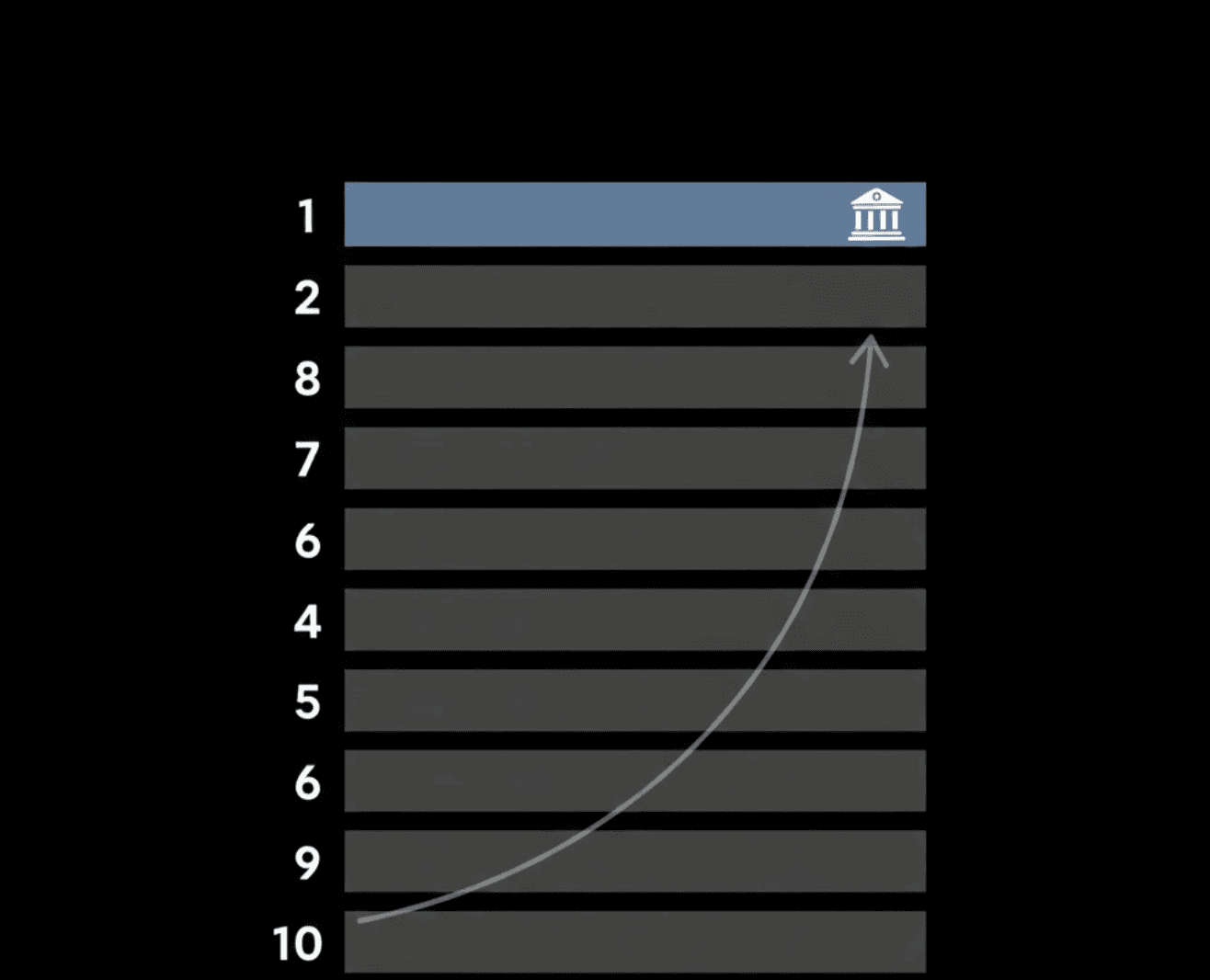
SEO for law firms puts you in front of clients who are searching for legal help right now. Your competitors show up when someone searches "personal injury lawyer near me." You don't. That's not because they're better lawyers. It's because they rank higher. 97% of people looking for an attorney start with a search engine. If you're not in the top three results, you're invisible to clients who are ready to hire today.
While you read this sentence, someone in your city just searched for a lawyer. They clicked on one of the first three results. They called that firm. They signed a retainer.
That client could have been yours. But your website was buried on page four.
With over 418,000 law firms competing for attention in the United States alone (American Bar Association, 2024), visibility determines survival. The firms that dominate search get the cases. Everyone else fights for scraps.
Here is the reality: 97% of consumers who searched online for legal information used search engines to find the attorney they contacted (Thomson Reuters, 2024). If you are not ranking, you are not competing.
But search is changing. Google is no longer the only game in town. Today, 21% of consumers would use ChatGPT in their process of researching lawyers online (iLawyer Marketing, 2025). AI search engines like ChatGPT, Perplexity, and Google's AI Overviews are reshaping how potential clients find legal help.
SEO is no longer optional for law firms. It is the foundation for being found on Google today and being cited by AI search engines tomorrow. This guide shows you exactly how to build that foundation - covering everything from technical optimization to generative engine optimization for AI search. If you need expert help, explore our law firm SEO services.
This guide shows you exactly how to build that foundation. You will learn how search engines evaluate law firm websites, the specific tactics that drive rankings, and how to position your firm for the AI-powered future of legal search.
Key Takeaways
97% of legal consumers use search engines to find attorneys, making SEO the primary client acquisition channel (Thomson Reuters, 2024)
Law firm SEO delivers 526% ROI over three years, with average break-even at 14 months (First Page Sage, 2024)
SEO converts 3x better than paid ads: 7.5% conversion rate versus 2.2% for PPC (First Page Sage, 2024)
21% of consumers now use ChatGPT to research lawyers, requiring firms to optimize for AI search (iLawyer Marketing, 2025)
Local SEO is critical: 76% of local searches lead to contact within 24 hours (Google, 2024)
Strong traditional SEO is the foundation for AI visibility. You cannot skip fundamentals and expect AI systems to cite your firm.
What Is SEO for Law Firms?
Search engine optimization for law firms is the process of improving your website and online presence so potential clients find you when they search for legal services.
When someone types "divorce attorney Chicago" into Google, the search engine instantly evaluates thousands of websites to determine which ones best answer that query. SEO is how you convince Google—and increasingly AI systems—that your firm deserves to appear at the top.
Think of it this way: your website is your digital storefront. SEO is the signage, the location, and the reputation that brings people through the door.
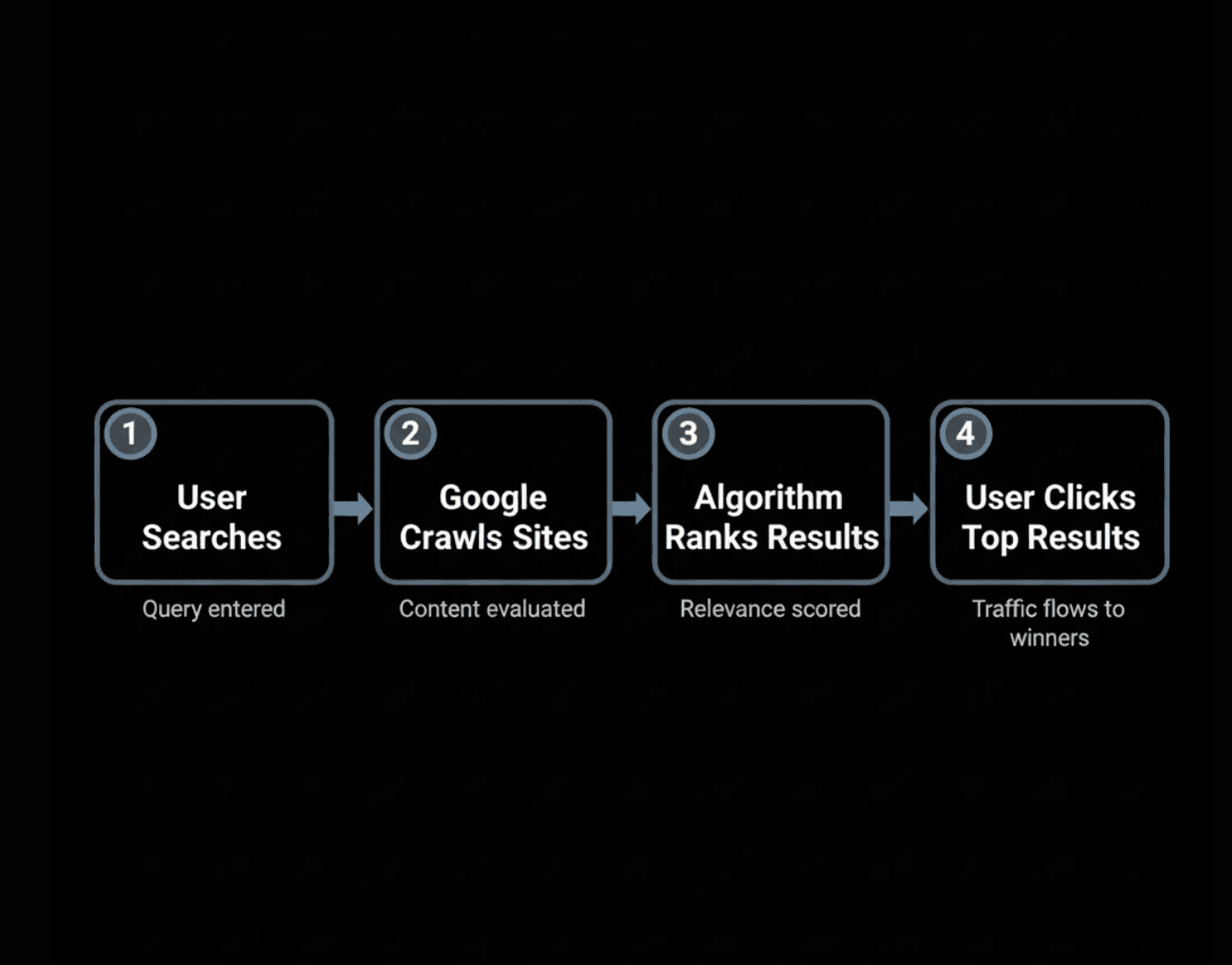
How Search Engines Evaluate Law Firm Websites
Google uses hundreds of ranking factors to determine which pages appear first. For law firms, the most important ones fall into four categories:
Relevance measures how well your content matches what someone searched for. If someone searches "DUI lawyer Austin," Google looks for pages that specifically address DUI defence in Austin, not generic criminal law content.
Authority reflects how much trust Google places in your website. This comes primarily from backlinks (other websites linking to yours), brand mentions across the web, and your overall domain strength.
Experience signals tell Google that real humans created your content. This includes author credentials, case results, client testimonials, and demonstrations of actual legal expertise.
Technical quality determines whether Google can properly read, index, and display your site. Fast loading speeds, mobile responsiveness, and clean code all contribute.
The #1 organic result in Google has an average click-through rate of 39.8%, receiving 19 times more clicks than the top paid result (First Page Sage, 2025). The difference between ranking first and ranking tenth is often the difference between a thriving practice and an empty waiting room.
Why Law Firms Face Unique SEO Challenges
Legal SEO is harder than most industries. Here is why:
High-value keywords attract intense competition. A single personal injury case can be worth hundreds of thousands of dollars in fees. Every law firm in your city wants to rank for those same keywords, and many are willing to spend heavily to get there.
YMYL scrutiny applies to legal content. Google classifies legal advice as "Your Money or Your Life" content, meaning mistakes could significantly impact someone's wellbeing. Google holds YMYL content to higher standards for accuracy and expertise.
Local delivery models complicate targeting. Most law firms serve specific geographic areas. You need to rank locally while competing against firms with larger budgets and broader reach.
Ethical advertising rules constrain tactics. Bar associations regulate attorney advertising. Certain claims and tactics that work for other businesses may violate professional conduct rules in your jurisdiction.
These challenges are exactly why a systematic approach to SEO matters. Random tactics will not overcome these obstacles. A coordinated strategy will.
This is where SEO copywriting becomes critical. The content on your site needs to satisfy Google's quality standards, speak directly to potential clients, and naturally incorporate the keywords that drive rankings - all without reading like it was written for an algorithm. Getting that balance wrong means your pages either rank but don't convert, or convert but never get seen.
Why SEO Matters for Law Firms in 2026
Before diving into tactics, you need to understand why SEO deserves your attention and budget. The data is overwhelming.
The Numbers Behind Legal Search Behaviour
Potential clients are searching for lawyers online right now. The question is whether they find you or your competitors.
| Statistic | What It Means |
|---|---|
| 97% use search engines to find attorneys | Nearly all legal consumers start with Google (Thomson Reuters, 2024) |
| 86.7% would use Google specifically | Google dominates legal search (iLawyer Marketing, 2025) |
| 76% of local searches lead to contact within 24 hours | Local searchers are ready to hire (Google, 2024) |
| 46% of all Google searches have local intent | Nearly half of searches are looking for nearby providers (Gladiator Law Marketing, 2025) |
| 40% cite reviews as primary information source | Online reputation directly impacts hiring decisions (Thomson Reuters, 2024) |
These numbers tell a clear story: if potential clients cannot find you through search, they will find someone else.
SEO ROI Compared to Other Marketing Channels
Law firm marketing is expensive. The question is not whether to spend, but where to spend for maximum return.
The 3-year ROI for an average law firm investing in SEO is approximately 526% (First Page Sage, 2024). That means for every dollar invested in SEO, firms see $5.26 back over three years.
| Channel | Conversion Rate | Average Cost Per Lead | 3-Year ROI |
|---|---|---|---|
| SEO | 7.5% | Lower over time | 526% |
| PPC (Google Ads) | 2.2% | $50-$500+ per click | Variable |
| Social Media | 1-2% | High ongoing spend | Limited |
| Traditional (TV, Radio) | <1% | Very high | Declining |
Data compiled from (First Page Sage, 2024) and (SeoProfy, 2025)
SEO generates an average 7.5% conversion rate, more than three times higher than PPC's 2.2% (First Page Sage, 2024). Why the difference? People trust organic results more than ads. They know the top organic results earned their position.
On average, it takes 14 months for law firms to recoup their SEO investment (First Page Sage, 2024). After break-even, the returns compound. Unlike paid advertising where traffic stops when spending stops, SEO builds lasting assets that continue generating leads.
High-growth law firms understand this math. They spend 16.5% of revenue on marketing, compared to 5% for no-growth firms (Hinge Marketing, 2024). Most of that increased spending goes toward digital channels like SEO.
The Rise of AI Search and What It Means for Lawyers
Here is where things get interesting—and where most law firms are falling behind.
AI-referred traffic across industries surged by 527% in early 2025 (Search Engine Land, 2025). This is not a future trend. It is happening now.
Twenty-one percent of consumers would use ChatGPT in their process of researching lawyers online (iLawyer Marketing, 2025). That number will only grow as AI tools become more mainstream.
Google AI Overviews now appear in approximately 29% of non-logged search sessions (First Page Sage, 2025). When someone searches for legal information, they increasingly see AI-generated summaries at the top of the page—summaries that cite specific sources.
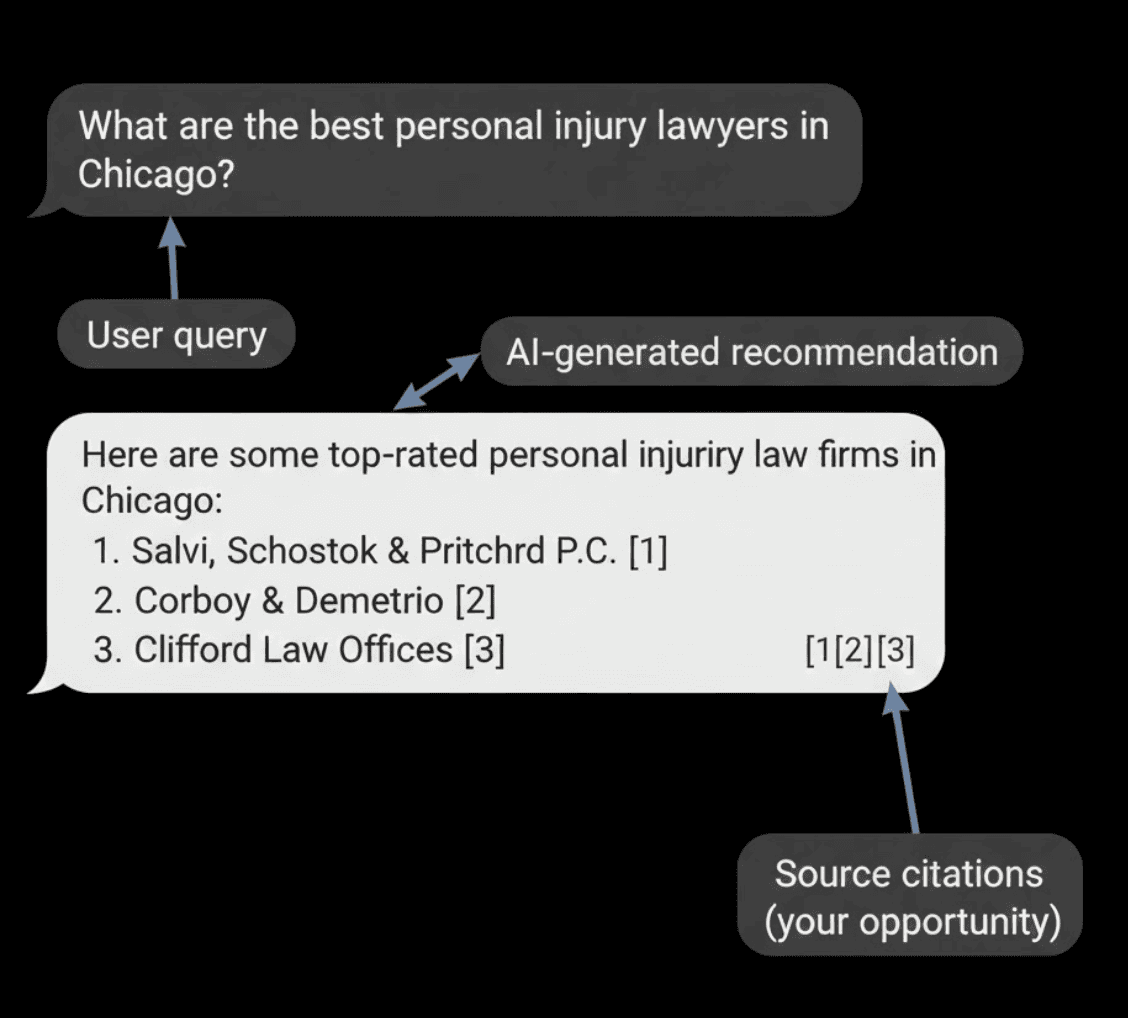
What does this mean for your firm? The websites that AI systems cite are the ones with:
Strong E-E-A-T signals (Experience, Expertise, Authoritativeness, Trustworthiness)
Well-structured content that AI can easily parse
Consistent brand mentions across the web
Authoritative backlinks from trusted sources
Sound familiar? These are the same factors that drive traditional SEO success.
This is the key insight: strong traditional SEO is the foundation for AI visibility. Firms that invest in proper SEO now are positioning themselves for both channels. Firms that ignore SEO will be invisible on Google today and absent from AI citations tomorrow.
Generative engine optimization builds on SEO fundamentals to maximize AI citations. But you cannot skip the fundamentals and expect AI systems to recommend your firm.
The Core Pillars of Law Firm SEO
Effective law firm SEO rests on five interconnected pillars:
Technical SEO — Ensuring search engines can properly crawl and index your site
Keyword Research — Understanding what potential clients actually search for
On-Page SEO — Optimizing your website's content and structure
Local SEO — Dominating location-based searches in your service area
Off-Page SEO — Building authority through links and brand mentions
These pillars work together. Strong keywords mean nothing without optimized pages. Optimized pages fail without technical foundations. Technical excellence is wasted without local visibility. And none of it matters without authority.
Let us work through each pillar systematically, starting with the research that informs everything else.
Keyword Research for Law Firms
Everything starts with understanding what your potential clients actually search for.
Keyword research is not guessing. It is systematically identifying the exact phrases people type into Google when they need legal help. Get this right, and you build content that attracts qualified prospects. Get it wrong, and you waste resources targeting terms that never convert.
Understanding Search Intent in Legal Queries
Not all searches are equal. Someone typing "what is personal injury law" wants different information than someone typing "best personal injury lawyer near me."
Search intent determines what type of content should rank. There are four primary intent types:
| Intent Type | What User Wants | Example Keywords | Content Type Needed |
|---|---|---|---|
| Informational | Learn something | "what is probate," "how does divorce work" | Educational guides, FAQs |
| Commercial | Compare options | "best divorce lawyer Austin," "top DUI attorneys" | Comparison content, reviews |
| Transactional | Take action | "hire personal injury attorney," "free consultation family lawyer" | Service pages, contact forms |
| Navigational | Find specific site | "[firm name] reviews," "[attorney name] phone number" | Homepage, contact page |
Commercial and transactional keywords drive direct business. Someone searching "hire criminal defence attorney Chicago" is ready to make a decision. Informational keywords build awareness and trust over time.
A complete SEO strategy targets all four intent types, with emphasis on the commercial and transactional terms that generate immediate revenue.
Finding High-Intent Keywords for Your Practice Areas
Here is a practical process for identifying the keywords your firm should target:
Start with your practice areas. List every service you offer: personal injury, family law, criminal defence, estate planning, business litigation, and so on.
Add geographic modifiers. Combine each practice area with your city, region, and neighbourhood names. "Personal injury lawyer" becomes "personal injury lawyer Miami," "personal injury attorney Brickell," "car accident lawyer South Florida."
Include service variations. People describe the same need differently. "Divorce lawyer," "divorce attorney," "family law attorney," and "marriage dissolution lawyer" all target similar clients.
Check search volume and competition. Use tools like Google Keyword Planner, Ahrefs, or Semrush to see how many people search each term and how difficult ranking will be.
Prioritize bottom-of-funnel terms. Keywords with clear buying intent deserve first attention. "Free consultation personal injury lawyer" signals someone ready to hire.
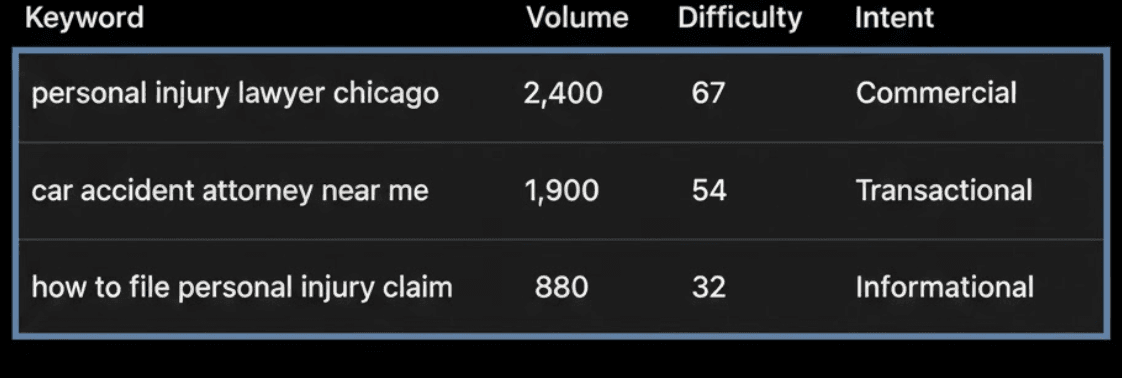
(in the image above, focus on "personal injury lawyer chicago" for your keyword research. )
Long-Tail Keywords and Local Modifiers
Head terms like "divorce lawyer" attract massive search volume and brutal competition. Long-tail variations like "divorce lawyer downtown Austin free consultation" have lower volume but much higher conversion rates.
| Keyword Type | Example | Monthly Volume | Competition | Conversion Potential |
|---|---|---|---|---|
| Head term | divorce lawyer | 50,000+ | Very High | Low (generic) |
| Mid-tail | divorce lawyer Austin | 1,200 | High | Medium |
| Long-tail | divorce lawyer downtown Austin free consultation | 90 | Low | Very High |
Long-tail keywords reveal specific needs. Someone searching "how much does a DUI lawyer cost in Texas" is actively evaluating their options. Create content that directly answers these queries, and you capture prospects at the moment they are ready to decide.
Local modifiers are especially powerful for law firms. Your practice area + city + neighbourhood creates targetable phrases that larger national directories cannot easily dominate. "Estate planning attorney Buckhead Atlanta" is more winnable than "estate planning attorney."
Now that you know what keywords to target, it is time to optimize the pages that will rank for them.
On-Page SEO for Law Firm Websites
On-page SEO is everything you control directly on your website. This includes the words on your pages, how those pages are structured, and the signals that tell search engines what your content is about.
Get on-page SEO right, and you give your content the best possible chance to rank. Get it wrong, and even the best content struggles to gain visibility.
Optimizing Title Tags and Meta Descriptions
Title tags are the clickable headlines that appear in search results. Meta descriptions are the summary text below them. Both directly impact whether someone clicks on your result.
Title Tag Formula for Law Firms: [Primary Keyword] | [Secondary Keyword] | [Firm Name]
Examples:
| Before (Weak) | After (Optimized) |
|---|---|
| Welcome to Smith Law | Personal Injury Lawyer Chicago |
| Our Services | Divorce Attorney Austin |
| Contact Us | Criminal Defence Lawyer Miami |
Keep title tags under 60 characters to avoid truncation in search results. Place your primary keyword near the beginning.
Meta Description Best Practices:
Stay under 155 characters
Include primary keyword naturally
Add a clear call to action
Highlight unique value (free consultations, 24/7 availability, case results)
Example: "Experienced personal injury lawyer in Chicago with $50M+ in settlements. Free consultation. No fee unless we win. Call today."
Header Structure and Content Organization
Search engines use headers (H1, H2, H3) to understand your content hierarchy. Proper structure helps both Google and visitors navigate your pages.
Every page needs exactly one H1 tag containing your primary keyword. This is your page's main topic.
H2 tags break your content into major sections. Each H2 should address a subtopic related to your H1.
H3 tags divide H2 sections into smaller parts. Use them for supporting points within each major section.
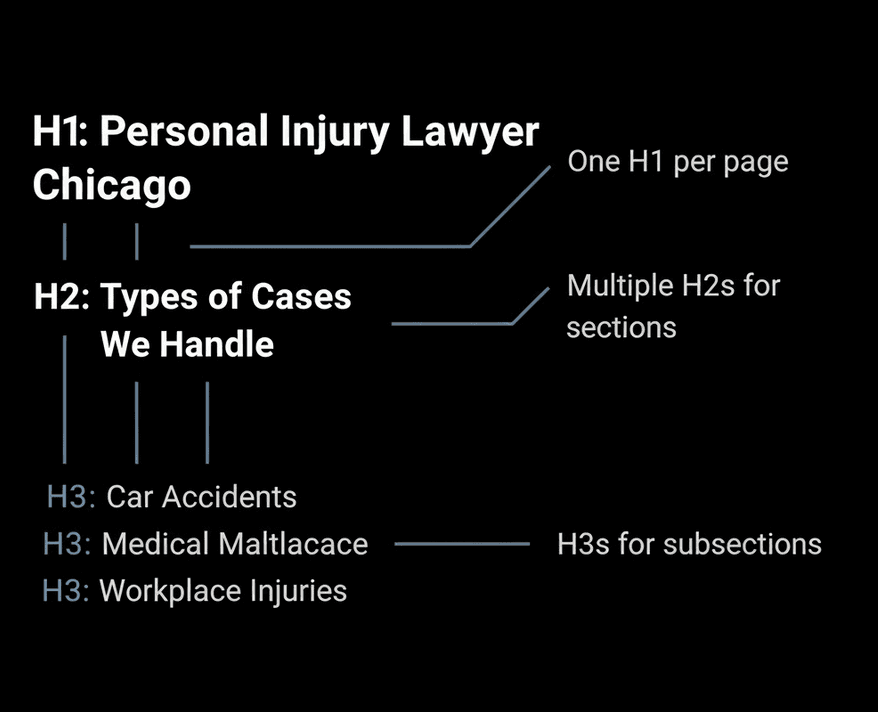
This structure also supports what we call hub-and-spoke content architecture. Your main practice area page (the hub) links to detailed pages about specific case types (the spokes). This builds topical authority and helps search engines understand the full scope of your expertise.
E-E-A-T Signals for Legal Content
E-E-A-T stands for Experience, Expertise, Authoritativeness, and Trustworthiness. Google uses these signals to evaluate content quality, especially for YMYL (Your Money or Your Life) topics like legal advice.
For law firms, E-E-A-T signals include:
Experience indicators:
Case results and settlement amounts
Years of practice in specific areas
First-person accounts of handling similar matters
Expertise markers:
Bar admissions and specializations
Published articles and speaking engagements
Detailed author bios with credentials
Authority signals:
Awards and recognitions
Media mentions and quotes
Peer endorsements and professional memberships
Trust factors:
Client testimonials and reviews
Clear contact information
Transparent fee structures
From my experience auditing over 90 law firm websites, the most common mistake is burying these signals. Credentials hidden in footer text do not help. Put your E-E-A-T signals where visitors and search engines can see them: in author bios, on practice area pages, and throughout your content.
Internal Linking Strategy
Internal links connect pages within your website. They distribute authority, help visitors find relevant content, and show search engines how your pages relate to each other.
Every page should link to related content. A page about car accident claims should link to your personal injury practice area page, your case results, and related blog posts about insurance claims or settlement timelines.
Use descriptive anchor text. "Click here" tells search engines nothing. "Learn about our car accident case results" tells them exactly what the linked page covers.
Create logical pathways. Visitors reading about divorce should be able to easily find information about child custody, property division, and alimony. Link these related topics naturally within your content.
Strong internal linking transforms isolated pages into an interconnected resource that both users and search engines can navigate efficiently.
Technical SEO for Law Firms
Great content needs a solid technical foundation to perform. Technical SEO ensures search engines can properly crawl, index, and display your website.
Think of technical SEO as the plumbing and electrical in a building. Visitors do not see it, but nothing works without it.
Site Speed and Core Web Vitals
Page speed directly impacts both rankings and user experience. Fifty-three percent of mobile users abandon sites that take over 3 seconds to load (Google, 2024).
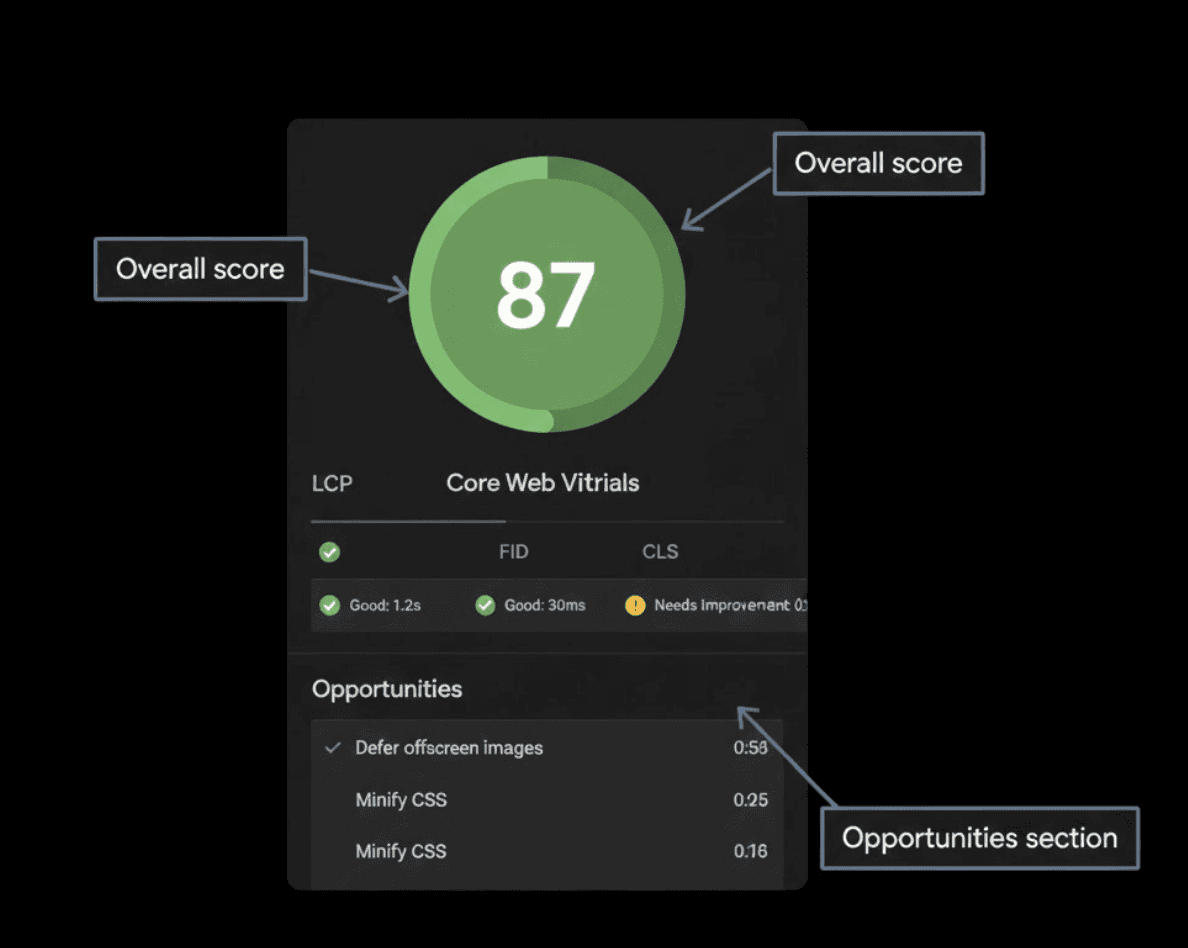
Google measures site performance through Core Web Vitals:
| Metric | What It Measures | Good Score |
|---|---|---|
| Largest Contentful Paint (LCP) | Loading performance | Under 2.5 seconds |
| Interaction to Next Paint (INP) | Interactivity | Under 200 milliseconds |
| Cumulative Layout Shift (CLS) | Visual stability | Under 0.1 |
Common speed killers for law firm websites include:
Oversized images (compress them)
Too many plugins or scripts
Cheap hosting with slow servers
Unoptimized video embeds
Heavy chat widgets loading immediately
Fix these issues, and you remove barriers that prevent your content from ranking.
Mobile Optimization
Google uses mobile-first indexing, meaning it primarily uses the mobile version of your site for ranking decisions. If your site works poorly on phones, your rankings suffer regardless of desktop performance.
Mobile optimization requirements:
Responsive design that adapts to all screen sizes
Readable text without zooming
Tap targets (buttons and links) large enough to click easily
No horizontal scrolling required
Fast loading even on cellular connections
Google captures 89% of mobile search traffic (Gladiator Law Marketing, 2025). Most of your potential clients will first encounter your firm on their phone. Make sure that experience is flawless.
Schema Markup for Attorneys
Schema markup is code that helps search engines understand your content more precisely. For law firms, proper schema can enhance your search listings with rich snippets showing ratings, reviews, and contact information.
Key schema types for attorneys:
LocalBusiness / LegalService — Basic business information
Attorney — Individual lawyer profiles
FAQPage — Question and answer content
Review — Client testimonials and ratings
From auditing over 90 websites for schema implementation, the pattern is clear: most law firms either have no schema or rely on generic plugin templates. Real performance comes from detailed, customized markup that accurately represents your firm.
Schema also helps AI systems understand your content. When ChatGPT or Google AI Overviews scan your site, structured data makes it easier for them to extract and cite your information accurately.
Site Architecture and Crawlability
Search engines need to find and access all your important pages. Poor site architecture creates barriers that prevent proper indexing.
XML sitemaps list all pages you want search engines to index. Submit yours through Google Search Console.
Robots.txt tells search engines which pages to crawl and which to ignore. Make sure you are not accidentally blocking important content.
URL structure should be clean and descriptive. yourfirm.com/personal-injury/car-accidents/ is better than yourfirm.com/page?id=47.
Internal linking ensures every important page is reachable within a few clicks from your homepage. Orphan pages (with no internal links pointing to them) struggle to rank.
Navigation should be logical and consistent. Users and search engines should both be able to understand your site structure at a glance.
Local SEO for Law Firms
For most law firms, local visibility is where the money is. Your clients come from your city and surrounding areas. Ranking for location-specific searches puts you in front of people actively looking for legal help nearby.
Local SEO is its own discipline, with specific tactics that differ from general organic optimization.
Google Business Profile Optimization
Your Google Business Profile (GBP) is the single most important local ranking factor. This is the listing that appears in the map pack when someone searches for lawyers in your area.
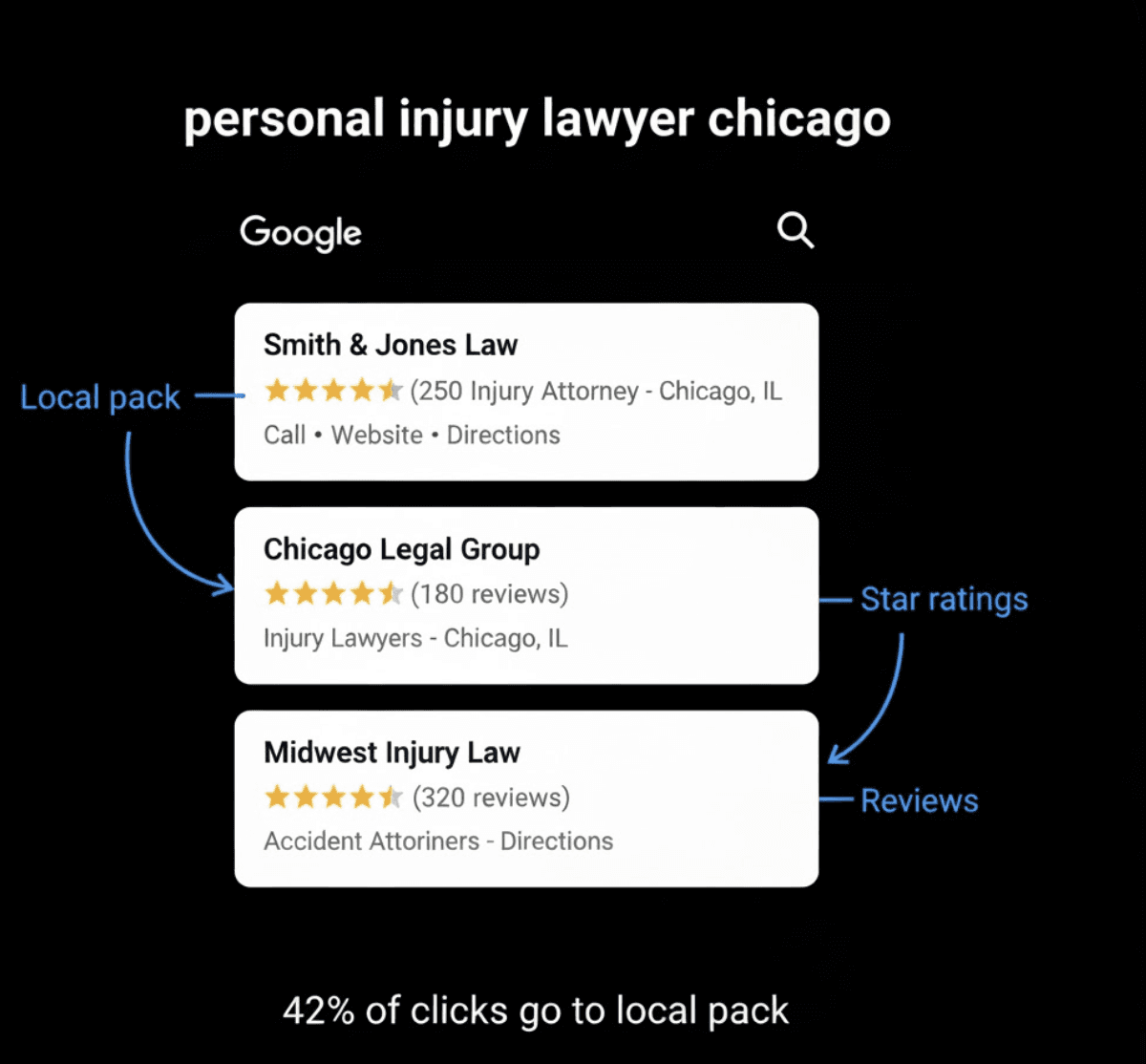
Optimized Google Business Profiles are 70% more likely to get visits and 50% more likely to be contacted (Google, 2024). Here is your optimization checklist:
Complete every field:
[ ] Accurate business name (no keyword stuffing)
[ ] Correct address and service area
[ ] Primary and secondary categories (Attorney, Personal Injury Attorney, etc.)
[ ] Phone number (use local number, not 800 number)
[ ] Website URL
[ ] Business hours
[ ] Services offered with descriptions
[ ] Detailed business description using natural keywords
Add visual content:
[ ] Professional logo
[ ] Exterior and interior photos
[ ] Team photos
[ ] Photos of your office and workspace
Maintain ongoing activity:
[ ] Weekly Google Posts about firm news, legal tips, or case results
[ ] Respond to all reviews (positive and negative)
[ ] Answer questions in the Q&A section
[ ] Update photos regularly
Building Local Citations
Citations are mentions of your firm's Name, Address, and Phone number (NAP) across the web. Consistent citations help Google verify your business information and improve local rankings.
Priority directories for law firms:
| Directory | Domain Authority | Priority |
|---|---|---|
| Avvo | 91 | Essential |
| Justia | 89 | Essential |
| FindLaw | 88 | Essential |
| Martindale-Hubbell | 85 | Essential |
| Lawyers.com | 82 | High |
| State Bar Directory | Varies | Essential |
| Yelp | 94 | High |
| Yellow Pages | 91 | Medium |
| BBB | 93 | Medium |
The critical rule: NAP consistency matters. If your address is "123 Main Street, Suite 400" in one place and "123 Main St #400" in another, search engines may see these as different businesses. Audit your citations regularly and correct inconsistencies.
Review Generation and Management
Reviews directly impact both rankings and conversions. Forty percent of consumers who contacted an attorney cited online reviews as their primary information source (Thomson Reuters, 2024).
Conversions improve by 44% when average star rating increases by one full star (SOCi, 2024). The math is simple: more positive reviews equal more clients.
Ethical review generation framework:
Identify natural touchpoints. The best times to request reviews are after successful case resolutions, positive client interactions, or milestone moments.
Make it easy. Send a direct link to your Google review page. Every click you eliminate increases completion rates.
Train your team. Front desk staff and paralegals often have the best client relationships. Teach them to ask naturally: "We are glad we could help. If you have a moment, a review would mean a lot to us."
Never incentivize. Offering discounts or gifts for reviews violates Google's policies and bar ethics rules.
Respond to every review. Thank positive reviewers. Address negative reviews professionally and offer to resolve issues offline.
Working with a Vancouver business, we implemented this exact framework and generated 50+ new reviews averaging 4.5 stars in just six weeks (Aetherhaus case study). The boost in local visibility was immediate and measurable.
Location Pages for Multi-Office Firms
If your firm serves multiple cities or has multiple offices, create dedicated pages for each location. A firm with offices in Austin, Dallas, and Houston needs three separate location pages optimized for each city's keywords.
Location page template:
H1: [Practice Area] Lawyer in [City]
Local phone number and address
Embedded Google Map
City-specific content (local court information, jurisdiction details)
Reviews from clients in that location
Directions and parking information
Local team members who handle cases in that area
Avoid duplicate content. Each location page should have unique, locally relevant information—not just the same content with the city name swapped out.
Off-Page SEO and Link Building
Your on-site work is only half the equation. Authority comes from off-site signals, primarily backlinks (other websites linking to yours) and brand mentions across the web.
Why Backlinks Matter for Law Firms
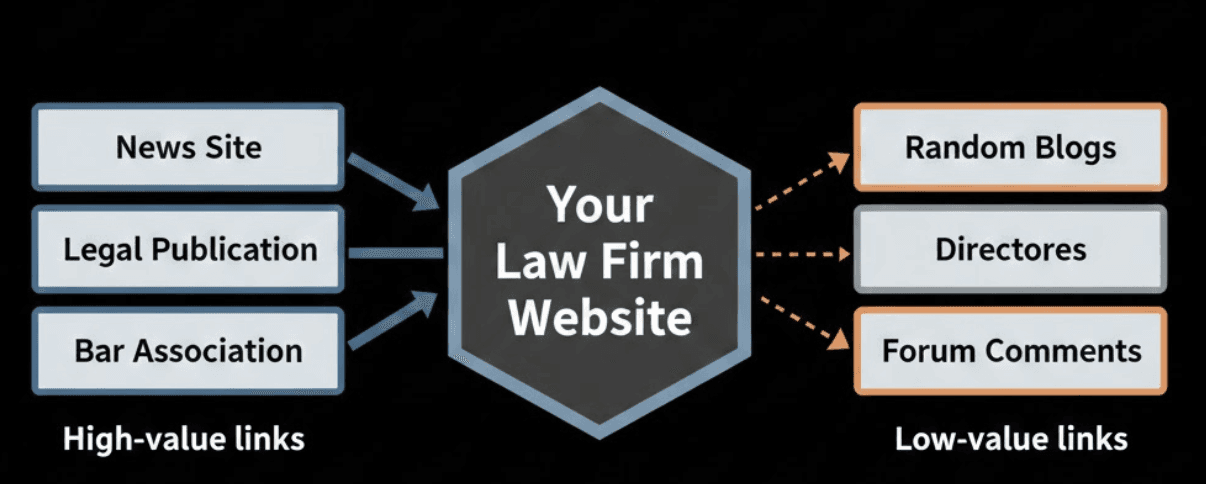
Backlinks are essentially votes of confidence from other websites. When authoritative sites link to your content, they signal to Google that your firm is trustworthy and relevant.
The #1 result in Google has on average 3.8 times more backlinks than pages ranking in positions #2 through #10 (Backlinko, 2023). Backlinks account for roughly 13% of overall ranking factors (Best Lawyers, 2024).
Not all links are equal. A link from a major news site or legal publication carries far more weight than a link from a random blog. Quality matters more than quantity.
Ethical Link Building Strategies for Attorneys
Link building for law firms must balance effectiveness with professional ethics. Here are approaches that work:
| Strategy | Difficulty | Value | Time Investment |
|---|---|---|---|
| Legal directory submissions | Easy | Medium | Low |
| Bar association listings | Easy | High | Low |
| Guest posting on legal publications | Medium | High | Medium |
| HARO / Featured / Qwoted responses | Medium | Very High | Ongoing |
| Local sponsorships | Easy | Medium | Low |
| Digital PR for newsworthy cases | Hard | Very High | Variable |
Legal directories provide easy foundational links. Submit to Avvo, Justia, FindLaw, and state-specific directories.
Guest posting on legal blogs and publications builds authority and drives referral traffic. Write about topics in your expertise area for sites your potential clients read.
HARO (Help a Reporter Out) connects journalists with expert sources. Respond to legal queries, and you may earn links from major news outlets when they quote you.
Local sponsorships of community events, legal aid organizations, or business groups often include website links.
Digital PR turns notable case results or firm news into media coverage. A significant verdict or innovative legal approach can generate substantial press mentions.
Brand Mentions and Entity Building
Links are not the only off-site signal that matters. Unlinked brand mentions (where your firm is named but not linked) also contribute to your perceived authority.
Google's AI systems build an "entity graph" that connects businesses with their attributes, locations, and contexts. The more consistently your firm appears across the web—in news articles, directories, social profiles, and industry discussions—the stronger your entity becomes.
This entity strength directly impacts AI search visibility. When ChatGPT or Perplexity answer questions about lawyers in your area, they draw from this web of connections. Firms with strong, consistent entity graphs are more likely to be cited.
We use a brand mentions audit process to identify every online mention of a firm, flag inconsistencies, and systematically strengthen entity signals. This work supports both traditional rankings and AI citation potential.
Content Marketing for Law Firms
Links build authority. Content builds relevance. Together, they drive rankings.
Content marketing for law firms is not about publishing for its own sake. It is about creating resources that attract potential clients, demonstrate expertise, and earn the trust of search engines.
Practice Area Pages That Convert
Your practice area pages are the workhorses of your website. These pages target your most valuable keywords and convert visitors into consultations.
Effective practice area page structure:
Clear H1 with primary keyword ("Personal Injury Lawyer in Chicago")
Compelling introduction addressing visitor pain points
Types of cases handled with links to detailed subpages
Your approach and process showing what sets you apart
Case results and testimonials proving your track record
Attorney profiles with credentials and experience
FAQ section answering common questions
Strong call to action with easy contact options
Aim for 1,500+ words on main practice area pages. Depth signals expertise to search engines and provides the information potential clients need to make decisions.
Blog Content Strategy
Twenty-seven percent of lawyers have blogs (American Bar Association, 2023). Those who blog strategically gain significant competitive advantage.
Content types that perform well for law firms:
| Content Type | Purpose | Example Topics |
|---|---|---|
| FAQ content | Capture "People Also Ask" results | "How long do I have to file a personal injury claim?" |
| Legal guides | Build topical authority | "Complete Guide to Divorce in Texas" |
| Case studies | Demonstrate experience | "How We Won a $2.5M Medical Malpractice Verdict" |
| Local legal news | Show relevance | "New Illinois DUI Laws: What You Need to Know" |
| Timely content | Capture trending searches | "How to Protect Your Business During a Recession" |
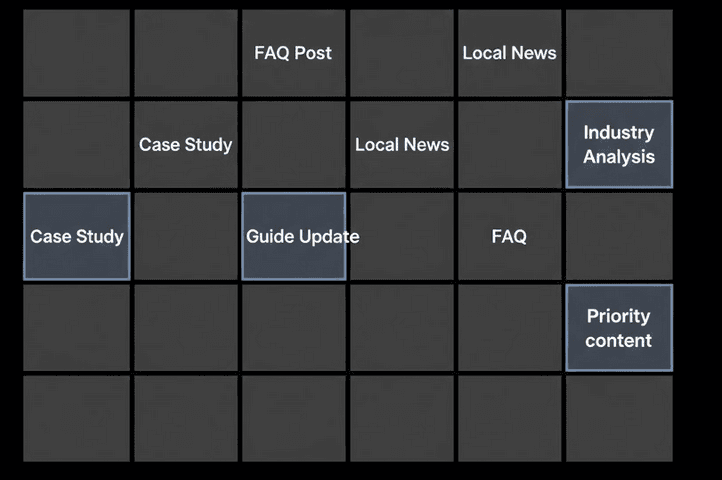
The key is consistency. Publishing one high-quality article per week builds momentum. Sporadic posting yields sporadic results.
Video Content for SEO
Law practice websites featuring video content experience a 157% boost in organic traffic (Grow Law, 2024).
Video builds trust faster than text. Potential clients can see your face, hear your voice, and get a sense of whether they would be comfortable working with you.
Video types that work for law firms:
Attorney introduction videos — Let potential clients meet you before they call
FAQ videos — Answer common questions on camera
Case explanation videos — Walk through how you approach specific situations
Client testimonial videos — Let satisfied clients tell their stories
Legal explainer videos — Break down complex topics visually
Post videos on YouTube (owned by Google) and embed them on relevant pages. Include transcripts for accessibility and additional SEO value.
Measuring Law Firm SEO Success
You cannot improve what you do not measure. Tracking the right metrics tells you what is working, what is not, and where to focus your efforts.
Key Performance Indicators to Track
| Metric | What It Measures | How to Track |
|---|---|---|
| Organic traffic | Visitors from search engines | Google Analytics |
| Keyword rankings | Position for target terms | Ahrefs, Semrush, or rank tracker |
| Local pack visibility | Appearance in map results | Local rank tracking tools |
| Conversion rate | Percentage of visitors who contact you | Google Analytics goals |
| Cost per lead | Marketing spend divided by leads generated | CRM + Analytics |
| Revenue from organic | Cases signed from SEO traffic | CRM attribution |
Traffic without conversions is vanity. The ultimate measure of SEO success is not rankings or traffic—it is cases signed and revenue generated. Make sure your tracking connects search performance to business outcomes.
Tools for Monitoring SEO Performance
| Tool | Cost | Primary Use |
|---|---|---|
| Google Search Console | Free | Rankings, impressions, technical issues |
| Google Analytics | Free | Traffic, behaviour, conversions |
| Ahrefs | Paid | Backlinks, competitor analysis, keyword research |
| Semrush | Paid | Similar to Ahrefs, with additional features |
| BrightLocal | Paid | Local rankings, citation tracking |
| CallRail | Paid | Phone call tracking and attribution |
At minimum, set up Google Search Console and Google Analytics. These free tools provide essential insights into how your site performs in search and how visitors behave once they arrive.
Preparing Your Law Firm for AI Search
Traditional SEO is the foundation. But the future belongs to firms that also optimize for AI.
This is not speculation. AI-referred traffic surged 527% in early 2025 (Search Engine Land, 2025). One in five consumers would already use ChatGPT to research lawyers (iLawyer Marketing, 2025). The shift is happening now.
Why Strong SEO Is the Foundation for GEO
Here is what matters most: you cannot skip SEO to pursue AI optimization.
Every signal that AI systems use to evaluate sources—authority, expertise, content quality, brand strength—comes from the same foundations that drive traditional SEO. Firms that invest in proper SEO are simultaneously building AI citation potential.
Conversely, firms that ignore SEO fundamentals will struggle to gain visibility in any channel, traditional or AI-powered.
The firms winning in 2026 are not choosing between Google and ChatGPT. They are building foundations that work for both.
Working with Aetherhaus, a Vancouver wellness business, we applied these principles alongside traditional SEO. The result: they now rank #2 in ChatGPT for "best sauna studios in Vancouver" while also achieving 686% organic traffic growth (case study).
Should You DIY or Hire an SEO Agency?
You now understand what law firm SEO requires. The question is whether to handle it yourself or bring in outside help.
Both approaches can work. The right choice depends on your firm's situation.
When DIY SEO Makes Sense
Managing SEO in-house can work if:
You have time to learn and execute. SEO is not a weekend project. Expect 10-20 hours per month minimum for meaningful results.
Your market is not highly competitive. Solo practitioners in smaller cities can often gain traction with basic optimization.
You have a single practice area. Simpler businesses require simpler strategies.
Budget is genuinely constrained. If hiring is not financially viable, DIY is better than nothing.
If you go the DIY route, focus on fundamentals first: Google Business Profile optimization, basic on-page SEO, and local citations. These deliver the most impact for the least technical complexity.
When to Hire a Law Firm SEO Agency
Twenty-eight percent of law firms outsource their SEO (SeoProfy, 2025). Outsourcing makes sense when:
Your market is highly competitive. Major metros require sophisticated strategies and sustained effort.
You have multiple practice areas or locations. Complexity requires expertise.
Your time is worth more elsewhere. Hours spent on SEO are hours not spent practicing law.
You want faster results. Experienced agencies have proven processes that accelerate outcomes.
Growth is a priority. High-growth law firms spend 16.5% of revenue on marketing (Hinge Marketing, 2024).
Law firms spend an average of $120,000-$150,000 annually on SEO (First Page Sage, 2024). This is a significant investment, but the 526% three-year ROI makes it worthwhile for firms in competitive markets.
What to Look for in an SEO Partner
If you decide to hire, choose carefully. The legal SEO space has its share of underperformers and overpromisers.
Green flags:
[ ] Documented results in the legal industry
[ ] Transparent reporting and regular communication
[ ] Realistic timelines (not "page one in 30 days")
[ ] Focus on business outcomes, not just rankings
[ ] Understanding of AI search and future trends
[ ] No guaranteed ranking promises (no one can guarantee Google's behaviour)
Red flags:
Vague or evasive about their methods
Guaranteed #1 rankings
Extremely cheap pricing
No case studies or references
Focus solely on traffic without conversion discussion
Unfamiliar with legal industry constraints
Conclusion
SEO for law firms in 2026 is not optional. It is the foundation for being found on Google today and being cited by AI search engines tomorrow.
The firms that dominate search are not lucky. They are systematic. They understand that visibility is built through:
Strategic keyword targeting that aligns with client intent
On-page optimization that demonstrates expertise
Technical foundations that enable search engines to properly index content
Local SEO that captures geographically relevant searches
Authority building through links and brand mentions
Content marketing that addresses client needs at every stage
And increasingly, they are preparing for AI search—building the E-E-A-T signals, structured data, and entity strength that AI systems use to decide who to cite.
The 97% of legal consumers who start their search online are looking for you right now. The question is whether they will find you or your competitors.
You have the roadmap. The next step is yours.
If you are ready to build search visibility that works for both Google and AI search, contact us to discuss how we can help.
Frequently Asked Questions
How long does SEO take for law firms?
SEO is a long-term investment. Most law firms see meaningful ranking improvements within 3-6 months, with significant traffic growth following. On average, it takes 14 months for law firms to recoup their SEO investment (First Page Sage, 2024). After break-even, returns compound as your authority grows.
How much should a law firm spend on SEO?
Law firms spend an average of $120,000-$150,000 annually on SEO (First Page Sage, 2024). Smaller firms in less competitive markets may spend $2,000-$5,000 monthly. Firms in major metros targeting high-value practice areas often invest $10,000+ monthly. Budget should reflect your market's competitiveness and growth goals.
Is SEO worth it for small law firms?
Yes. The 3-year ROI for an average law firm investing in SEO is approximately 526% (First Page Sage, 2024). Small firms often benefit more than large firms because they face less competition for long-tail, local keywords. A solo practitioner in a mid-sized city can achieve significant visibility with focused effort.
What is local SEO for lawyers?
Local SEO focuses on appearing in location-based searches like "divorce lawyer near me" or "personal injury attorney [city]." It includes optimizing your Google Business Profile, building local citations, generating reviews, and creating location-specific content. For most law firms, local SEO drives the majority of new client inquiries.
Can law firms do SEO themselves?
Yes, though with significant time investment. Expect to spend 10-20 hours monthly on SEO activities. DIY works best for solo practitioners in smaller markets with time to learn. Firms in competitive markets or with limited time typically see better results partnering with experienced agencies.
How do I get my law firm to rank on Google?
Ranking requires a systematic approach: research keywords your clients search for, optimize your website's content and technical foundations, build your Google Business Profile, earn quality backlinks, generate positive reviews, and publish helpful content consistently. There are no shortcuts, but the process is proven.
What is GEO for law firms?
Generative Engine Optimization (GEO) is the practice of optimizing your online presence to be cited by AI search engines like ChatGPT, Perplexity, and Google AI Overviews. GEO builds on traditional SEO by strengthening E-E-A-T signals, structured data, and entity presence across the web.